
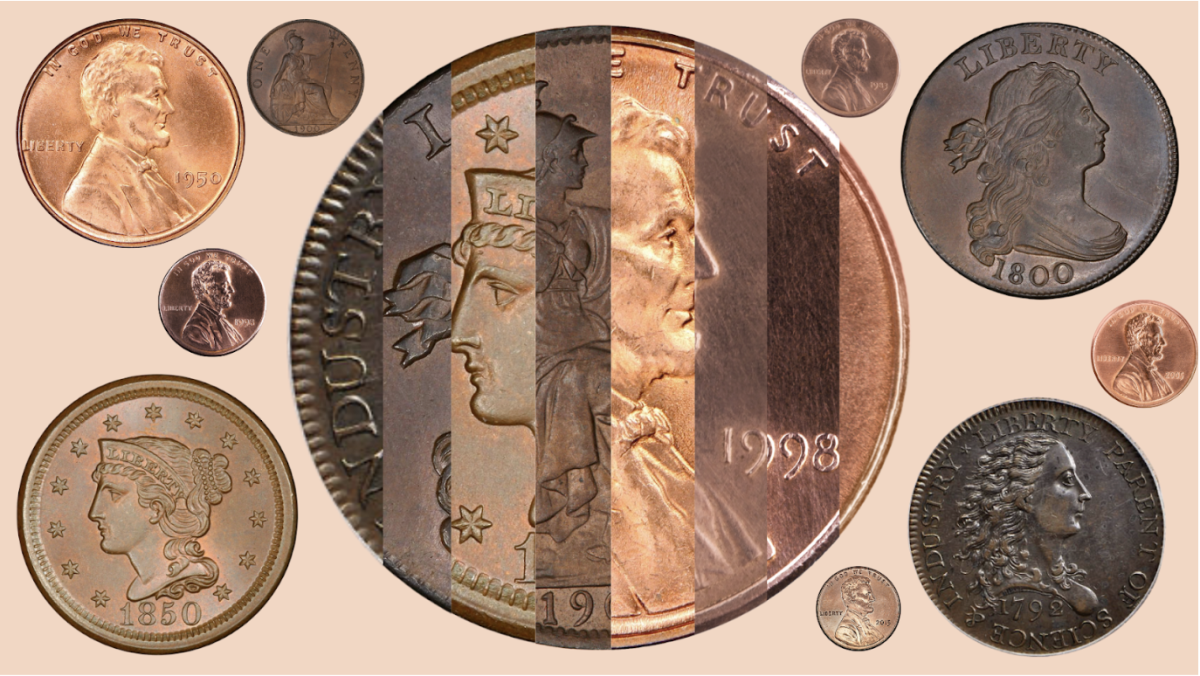
After 232 years of minting, 240 billion in circulation, and a pretty penny’s worth of cultural ties, the penny is finally dead. A recent announcement from the United States Mint published that general production of the penny would end. This marks a significant moment in U.S. history, but why would the U.S. want to kill the penny, and why does this matter?
The penny has deep roots in American history and culture. The first penny was printed by a private corporation in 1787, but was only officially produced by the United States Mint in 1792. First mints were actually composed of 100% copper, but this rate was lowered over time to reduce costs and substituted with zinc. During times of war, the alloys that molded pennies were adjusted to meet material restraints at the time. For example, pennies were typically made of steel in 1943 so that copper could be reallocated for World War II efforts.
Even with these composition adjustments, the penny has been unprofitable since 2006. That’s right, the government is losing money while, quite literally, printing money. In 2024, it cost 3.7 cents to make one cent, resulting in a 2.7 cent loss for each penny that the U.S. mints. By ending production, the U.S. Mint projects “approximately $56 million per year in production savings.” However, ending pennies can drive their own issues.
The bill ending pennies, titled the “Common Cents Act,” suggests that businesses should round prices to the nearest 5 cents, where a nickel can be used in place. Now this may seem like a negligible amount, but round-ups can quickly add up when multiple items are purchased. In an economy where many families are already struggling to afford basic necessities, phasing out pennies could be yet another stoke in the unaffordability flame.