As phones become more of an integral part of our modern population’s lives, schools are forced to find ways to limit the use within their walls where education is allegedly being compromised.
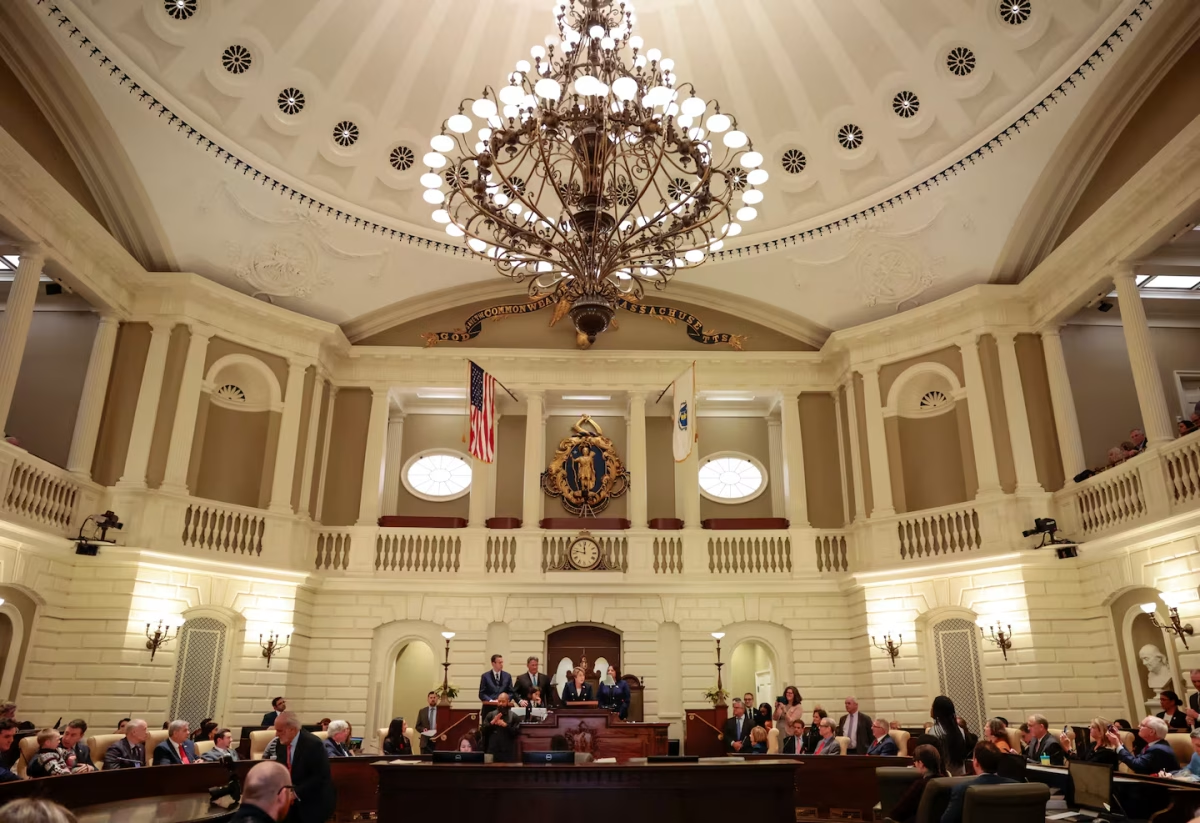
The Massachusetts legislature is currently working to pass a bill that is being referred to as “the most restrictive ban on social media usage for teens in the country.” The bill covers topics concerning phone use from limitations for social apps, to strict constraints within classrooms. So what would this realistically look like if the bill were to be passed?
The advancing bill decrees a “bell to bell” ban on personal electronic devices in all public K-12 schools. Phones, watches, tablets, and all other devices would be prohibited for the entirety of the school day. This includes lunch, passing periods, and school sponsored sports that occur during school hours. It was reported from towns that already implement this procedure that the policy proves to be successful. Bedford Representative Ken Gordan said, “Lunchtime became a social setting. Faces and eyeballs emerged from behind scenes, and students emerged in happier moods.”
While this seems like a beneficial and rational idea in retrospect, complications arise, especially with Lincoln Sudbury Regional High School’s uniquely open-campus and flexible schedule. Juniors and Seniors are technically allowed to leave school grounds during free blocks. Would the town restrict students’ phone use outside their property for the sake of the time still being within school hours? More problems with this ban are apparent when taking into consideration things like last minute bus schedule changes, where some students might need to contact last minute rides or inform their guardians/parents. On a darker note, with the exponential growth of armed-violence in school settings in recent years, the student body and parents would feel helpless not having access to easy communication via electronic devices.
The bill also targets another main topic of phone usage: social media. The bill lists a series of guidelines regarding social media companies including a mandatory age verification system, requiring the termination of users under age and the deletion of their personal information, and prohibition of platforms sharing information about a minor’s LGBTQ+ status or other characteristics protected by state law. The bill also details the limitations for specific age groups, banning any minor under 14 from using any social media, and only allowing 14 and 15 year olds access to platforms with verifiable parent consent. 16 year olds will be able to use social media without parent consent, but parents can obtain any data minors submit to companies. As stated in the bill, platforms found to be in violation of any of the requirements will be subject to civil fines.
These regulations are meant to “reduce the negative impact social media is proven to have on teenagers’ mental health.” Representative Kate Lipper-Garabedian drew attention to a quote said by former surgeon general Vivek Murthy, saying, “The mental health crisis among young people is an emergency, and social media has emerged as an important contributor.”
That being said, the House and the Senate have different visions for the bill, the main discrepancy being that the Senate did not pass a social media ban for teens, and instead, focused on banning phones in schools. The next step is a conference committee, where the House and the Senate will select lawmakers to work out their differences and create a joint proposal for consideration.
This bill is a topic of much debate and there are several arguments about phones and social media and their respective effects on teens. For now, schools and students are left to the judgement of our legislature and their view of the future.