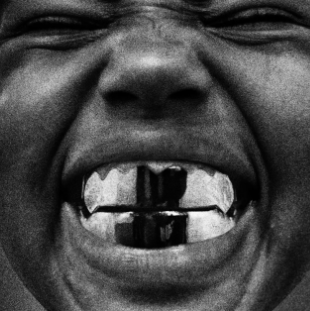
Kanye West, an influential rapper, genre-defining producer, and avant-garde fashion designer, has been in the center of the public eye for his controversial antisemetic statements and his praise for the former Nazi dictator of Germany, Adolf Hitler. On October 8th, 2025, on the platform X (formerly known as Twitter), West posted an anger-filled message targeted at the Jewish people: “I’m a bit sleepy tonight but when I wake up I’m going death con 3 On JEWISH PEOPLE.” By “death con,” West refers to the military alert system DEFCON, a scale of how ready the military must be during an event; DEFCON 5 is a normal day, while DEFCON 1 is nuclear warfare. Even though West is in the news for his controversial statements instead of his art, he has been steadily releasing new music in the hopes of reviving his legendary career.
On January 26, 2025, West bought a full page advertisement in the Wall Street Journal. In this advertisement, he wrote out an apology for his antisemetic behavior and explained that he is not a Nazi. He blamed his controversial behavior on his mental health, specifically his difficulty dealing with his bipolar-1 disorder. Bipolar disorder causes extreme mood swings, often characterized by emotional highs and lows as well as periods of mania and depression. When explaining why he became attracted to the Nazi mentality, he wrote, “In that fractured state, I gravitated toward the most destructive symbol I could find, the swastika, and even sold T-shirts bearing it.” West’s apology also came with the promise of a new comeback album to bring him back to the top of the charts and to end the antisemetic phase of his life.
Even before the album was released, its rollout, in typical Kanye fashion, was the subject of controversy. The initial version of the album, leaked online, included many songs utilizing artificial intelligence for vocals, some completely created by AI. This is a trend seen in other albums released during West’s “fractured state.” Another trend with these albums is how dissimilar they sound to older Kanye projects. Vultures 1 and Vultures 2, collaboration albums with fellow rapper Ty Dolla $ign, were bashed by critics for their boring tracks and uncreative concepts, something Kanye is rarely criticized for.
On March 28, 2026, Kanye released the finalized version of his album BULLY. The album was an immediate success, rising to second place on the Billboard Hot 200 chart.
While the album was a numerical success, the project’s actual content is a mess. Most of the songs, when listened to by themselves, are very good, with the exception of “CIRCLES” ft. Don Toliver. However, when listened to as a whole, the entire album does not flow well, and it is hard to pinpoint a theme or a genre. Songs like “WHATEVER WORKS” and “SISTERS AND BROTHERS” sound very fast, echoing the Vultures era of Kanye, while other songs like “MAMA’S FAVORITE” and “PUNCH DRUNK” are very slow and emotional, similar to his older album Ye. These songs do not transition in ways that make sense, instead sounding clunky and jagged when listened to sequentially. One may wonder whether this mix of polar opposite styles was intentional. Kanye has stated many times that his bipolar disorder has caused him to act in manic ways and feel confused and disoriented, and he has blamed it for his attacks on Jewish people. While the listening experience of the album is a problem, it is far from the biggest issue.
It is a necessity for Kanye to try to change the narrative around his personal image because of his past actions. If he does not, he will end up without support from the music industry and the world as a whole. BULLY completely fails this mission, as he never addresses his antisemitism head on, and when he tries it is so vague that it is impossible to understand his message. A good example of this is on the opening song, “FATHER,” in which he raps, “I used to be on Worldstar / Now I’m making Newsweek.” Worldstar Hip-Hop is a news source purely dedicated to news in the hip-hop world, while Newsweek is a more typical news channel. This lyric refers to his transition from a famous rapper to a controversial public figure. While he does address his actions, that is all he does: address them. It is common for an artist to address their problems in music in an attempt to save their image. This can be seen in Kendrick Lamar’s Mr. Morale & the Big Steppers, in which he confesses his problems and writes about his sex addiction and his infidelity. Similarly, in Megan Thee Stallion’s Traumazine, she apologizes to her late parents and the public for oversexualizing herself and reveals to the world her struggles with her mental health. While these projects do apologize and try to make amends to those whom they might have hurt, they deal with much less controversial problems than Kanye does. The complete avoidance of addressing his antisemitism results in the project feeling out of touch with the larger world and dismissive of his actions.
While Kanye never brings up his admiration of Adolf Hitler and antisemitism, he does get vulnerable in the album. The death of Kanye’s mother has taken an extreme emotional toll on him; this can be seen on the albums Donda and Donda 2, both named after his late mother. In the song “MAMA’S FAVORITE” on BULLY, he once again raps and sings about the passing of his mother. He raps, “Only child, mama’s favorite. / Conditions that I made it out, it’s amazin’. / Goin’ through cycles, different phases.” He opens up about his mother’s passing and how, along with his bipolar disorder, it has taken a toll on his mental health; he describes going through “different phases” of emotions and mental stability. While he does dodge the elephant in the room, he still opens up in a way that saves the album from complete lyrical failure.
At the end of the day, music is an auditory experience and cannot be judged purely based on lyrical content. This Kanye project, like most others, is produced wonderfully. Songs like “HIGHS AND LOWS” and “PUNCH DRUNK” are perfect examples of this. In “HIGHS AND LOWS,” Kanye creates an atmospheric, almost angelic beat, and paired with exaggerated, sing-rap vocals, the song feels almost heavenly. Kanye is not afraid to experiment either; features from Andre Troutman and Peso Pluma mix rap with other genres like electronic and Latin music in ways that match Kanye’s style while also sounding different than all of his other projects. With this album being so important for reviving his career and saving his reputation, it is admirable that he still has the confidence and passion to experiment with different styles and sounds.
Kanye West is far from redemption, and while a written apology is a good start, completely dodging his antisemitism throughout the entire BULLY album is the project’s greatest flaw. While the songs themselves sound phenomenal, the content of the lyrics and other aspects of the album fail to make up for his controversies, resulting in a project that feels dirty to listen to. While Kanye’s legacy will be one of innovation and creativity, it will also be one of hatred and antisemitism. Kanye’s BULLY provides an example of a phenomenal art piece ruined by poor decisions outside of the album, giving us all a lesson that every action has consequences and that hatred will only lead to failure.