
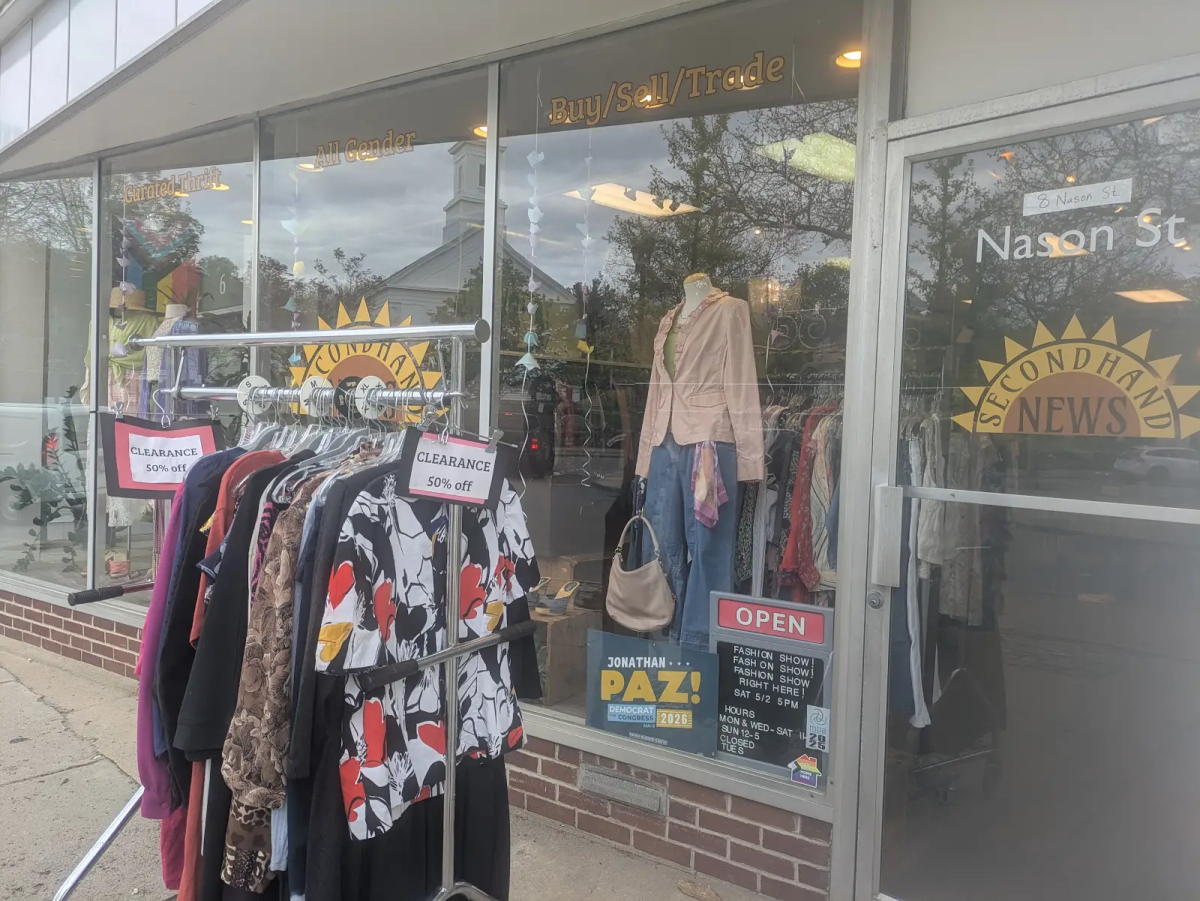
Sunlight streams through windows in which a variety of clothes are displayed. Walking through the door, more racks with an eclectic mix of spring styles come into view. Here, at a Maynard thrift store, Secondhand News, an employee, Savana DeVos, shared the store’s backstory, events, and importance in this modern age.
DeVos began working at Raspberry Beret, the secondhand store which preceded Secondhand News, before the COVID-19 pandemic. She further developed an interest in fashion online during the pandemic and has carried this interest into her current job at Secondhand News.
Thrift stores are especially important because of their environmental benefits. As DeVos says, “There is so much textile waste and clothing waste.” In fact, the EPA estimates that approximately 11.3 million tons of textile waste, or around 81.5 pounds per person, is produced each year in the United States alone. Methods of producing clothing, especially those used in fast fashion, are harmful to the environment. According to a 2018 report by Quantis International, dyeing and finishing fabrics contribute to a combined 36% of global water pollution. Furthermore, 35% of microplastics in the ocean come from the laundering of cheap fabrics like nylon and polyester, as estimated by a 2017 report from the International Union for Conservation of Nature.
Instead of contributing to fast fashion and negative environmental effects, shopping secondhand makes it possible to find affordable, good-quality, and fashionable pieces that will not be quickly discarded. “It’s better to wear your clothes until you really can’t anymore,” says DeVos. This creates a circular economy, in which materials stay in circulation for as long as possible in order to limit waste.
Old clothes can also be sold to contribute to a circular economy. In addition to sourcing clothing from vintage warehouses, many thrift stores, including Secondhand News, allow everyone interested to sell old clothes. People can either walk in or, if they plan to donate more than three pieces of clothing, make an appointment. DeVos describes that “it’s not consignment, which might take a little bit longer.” Therefore, it is very easy to allow old clothes to find new meaning rather than throwing them away.
While walking in the halls of LS, it is very common to see students wearing new clothes from big companies or fast fashion. However, thrift stores like Secondhand News are a great way for students to reduce fashion waste, support local businesses, and get some groovy ‘new’ clothes!